
Diverse project group reviewing evidence papers and process notes at a dark review table

Use cases with system depth

Project Patterns

The use case shows where the real system value must hold.

Many requests first sound like a single AI feature: review documents, prepare cases, structure meetings or build a live interface. They become resilient when the right system component is in place: agentic operating layer, knowledge space, evidence layer, real-time interaction or control room. This page shows patterns LatentDrift has built repeatedly and how they turn into concrete project decisions.

  • Traceable trails
  • Testable patterns
  • Controlled handover

Project patterns

Decisions that can be verified.

The domains differ. The technical questions are similar: which data supports the decision, which agents may act, how is the result measured, and where should human control remain? LatentDrift uses project patterns that do more than explain the questions: they pre-structure state, interfaces, tests and handover. That is where current research becomes practical: as a repeatable decision aid with concrete system impact.

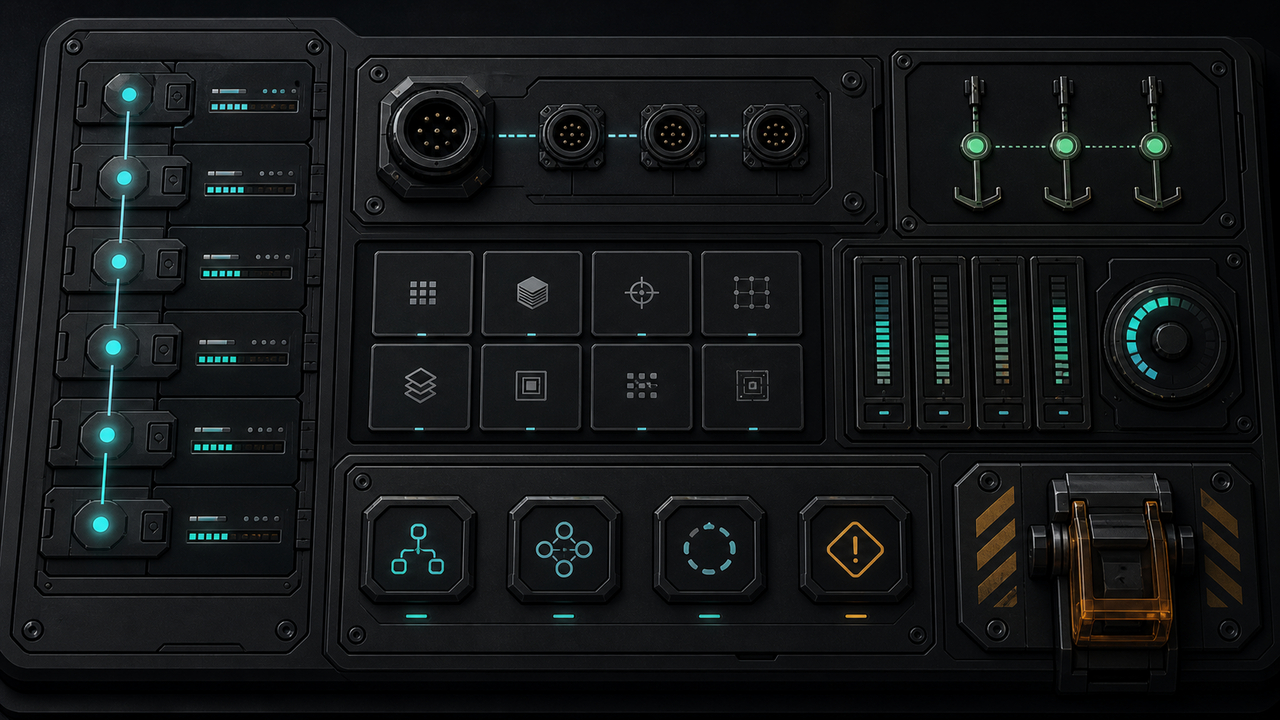
Dark agent cockpit with status spine, tool ports, source anchors, cost and latency meters and approval latch
Control room

Latent Agent Cockpit

A reusable workspace for agent systems where status, tool calls, sources, state, cost, latency and approvals remain readable together. Roles, metrics and permissions change by organization; the control pattern stays stable. In practice this creates a role model, trace schema and clear rules for when an agent may plan, act, wait or escalate.
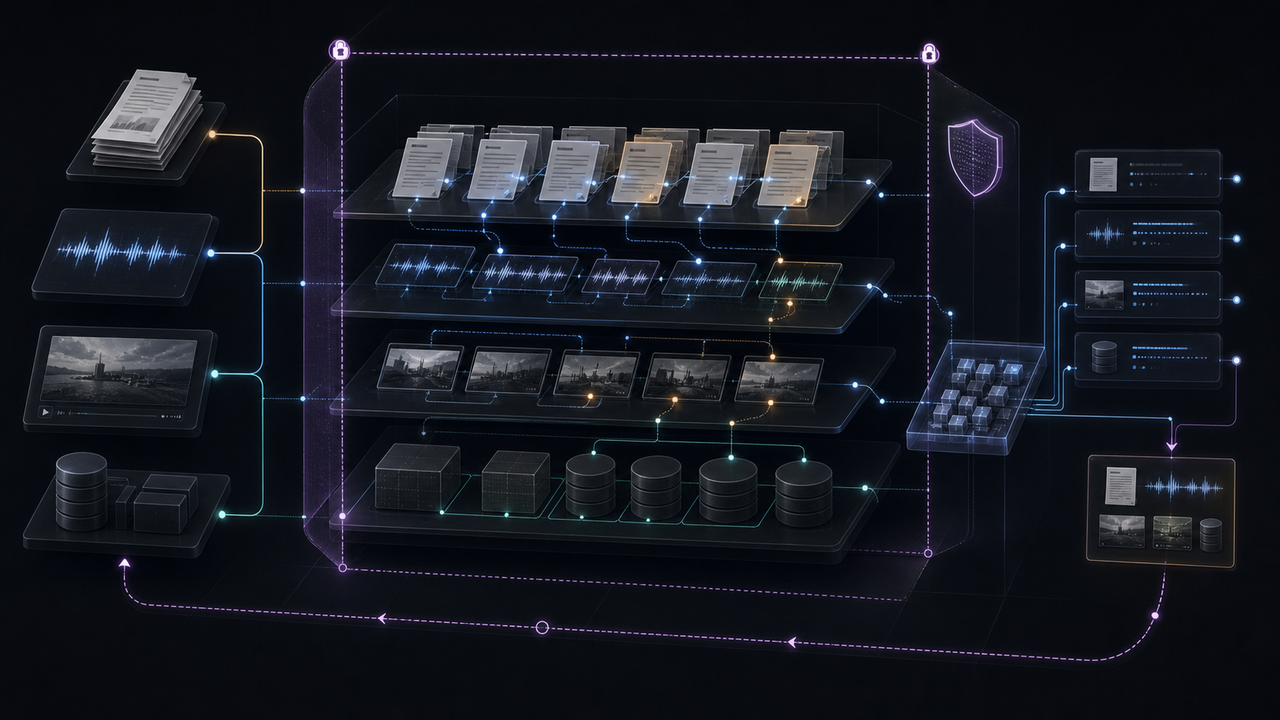
Dark knowledge space with document, meeting, video and database layers, rights boundary, provenance line, chunk tray and review path
Knowledge space

Multimodal Knowledge Space

Documents, meetings, videos and databases become semantically connected, versioned and usable where permissions and purpose allow it. The knowledge space is an adaptable system component with provenance, freshness and usage boundaries. Every relevant output should later point back to source, data status, chunk, access rule and review path.

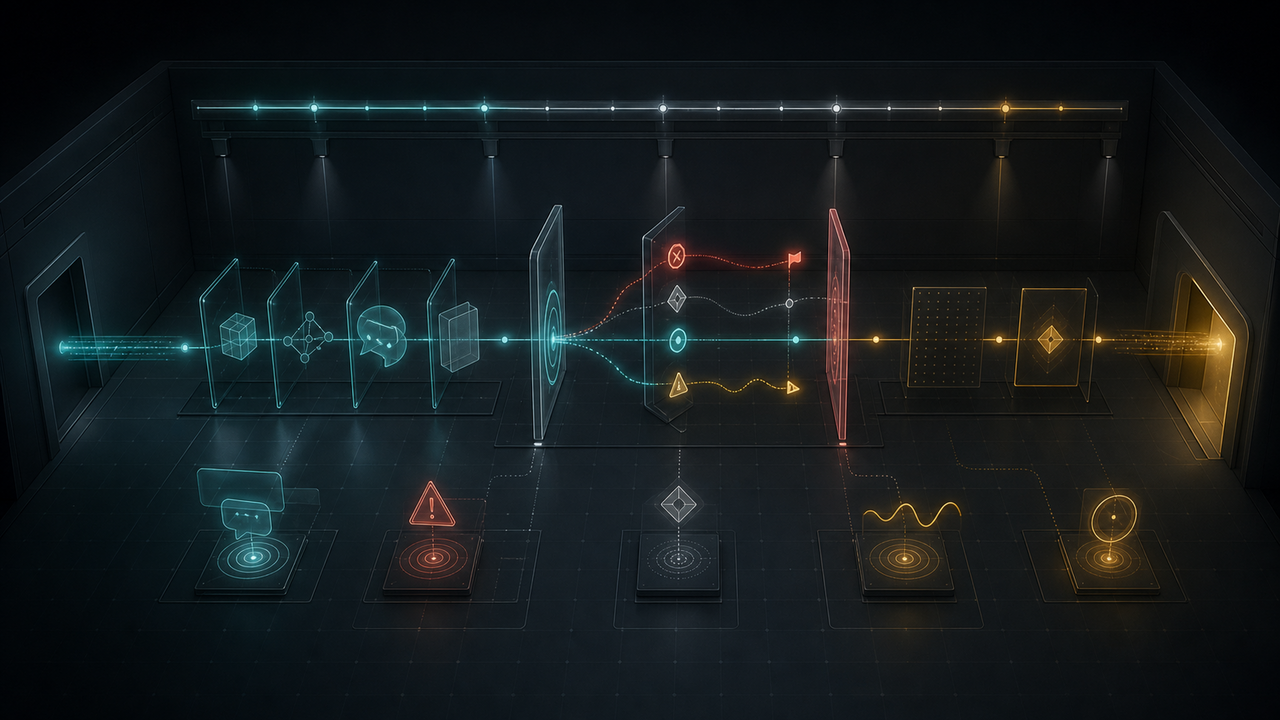
Dark real-time test chamber with dialogue state, interruption gate, consent boundary, fallback threshold, latency trace and handover exit
Real-time system

Real-time Interaction Room

Dialogue, reaction logic, visual output, interruption points and human takeover are tested together as a real-time pattern. The decisive question is whether the system still reacts clearly under interruption, correction and uncertainty. Dialogue state, latency budget, consent, fallback and handover are therefore part of the first working build, not late additions.

Friction points

Between model, product and operation.

The risky parts often sit between model, product and operation. LatentDrift treats them as early design questions. When memory, permissions, latency and evaluation are clear, even a strong model becomes more controllable. That is why we go deep on those friction points and focus on fields where that depth creates system value.

Unclear memory

If nobody defines what an agent may retain, the result is hard-to-explain answers, unnecessary cost and privacy risk. Memory therefore needs scope, lifetime, source and deletion logic alongside context-window design. LatentDrift separates durable knowledge, session context and run state so it is clear later which state influenced an output.

  • Allowed to retain
  • Lifetime
  • Visible source
  • Deletion logic

Latency tested too late

Especially with live interfaces, reaction time decides usability. Streaming, interruption and fallback therefore belong in the first working build. Late latency testing moves product decisions to the end, where they are expensive to correct. A real-time test also needs rendering, turn-taking, backpressure and human takeover.

  • Stream early
  • Interrupt early
  • Backpressure
  • Human takeover

Uncontrolled agentic systems

More agents can amplify errors faster when roles, routing, tool permissions, recovery and direct communication remain uncontrolled. A baseline therefore needs to cover domain quality, source grounding, cost, interaction behavior and run traces together. Value appears when the operating layer can stop, reset, explain and hand a run back to a human.

  • Governed roles
  • Tool permissions
  • Stop the run
  • Human handover

Thread

A clear path from risk to solution.

  1. 01

    Understand

    Use case, data status, users, risks and acceptance criteria are made explicit. This prevents technical possibilities from hiding the actual decision need. The result is a compact decision frame: target decision, data basis, risk class, required explanation and first test cases.

  2. 02

    Decide

    Agent roles, model strategy, memory, permissions, UI and interface behavior are defined. Each decision is written so it can later be confirmed, changed or rejected: with decision entry, trace event, acceptance criterion and responsible role.

  3. 03

    Build

    Data pipelines, APIs, AI logic, streaming, frontend and integrations are connected. Build order follows risk: first the critical state, then the wider interface. Each step produces an observable trail for quality, cost and interventions.

  4. 04

    Verify

    Test sets, traces, metrics, human feedback and handover show whether the system holds. Verification means more than counting errors; it exposes operability and responsibility: what may go live, what needs review and what remains an experiment?

Use cases

Tasks with system depth.

These tasks often look like single AI features. In practice they become reliable only when the right system component is in place: data permissions, evaluation logic, interface state and clear boundaries for autonomy. The use case shows where the specialized component has to prove its value.

Document intelligence

Evaluate, summarize and verify documents, reports, records and knowledge bases with source references. The decisive question is whether each statement has a supporting source, current status, permission and review path. The component combines extraction, retrieval, evidence log and human approval.

  • Supporting source
  • Current status
  • Permission
  • Review path

Meeting and video intelligence

Translate audio, video and transcripts into topics, tasks, risks, events and next steps. Value emerges when temporal structure, speakers, visual cues and open decisions are evaluated together. The knowledge space therefore needs timestamps, speaker attribution, scene context and a clear separation between observation, interpretation and task.

  • Timestamps
  • Speaker attribution
  • Scene context
  • Separate tasks

Dialogue and presence workflows

Make complex processes accessible through natural speech, visual feedback or avatar-based presence while keeping control. State display, consent, interruption and human takeover need to be part of the flow. An avatar is one possible surface; the real component is the controlled real-time interaction underneath.

  • State display
  • Consent
  • Interruption
  • Human takeover