Project manager and developers working at monitoring displays in a dark control room

AI systems for controlled operation

LatentDrift

We build AI systems that stay under operational control.

LatentDrift develops highly specialized AI systems in a focused set of technical fields where current research shapes production reliability: agentic systems, evidence layers, knowledge spaces and multimodal real-time interaction. New methods become decision maps, operating specifications, evidence logs, evaluation sets and handover artifacts that teams can reuse without forcing their data rights, workflows or operating model into a rigid suite.

  • Agentic Systems
  • Evidence Layer
  • Real-time Interaction

Focus

Control starts in system design.

The common thread is controlled state management. That creates depth instead of topic breadth: we evaluate new work on agents, latent communication, evaluation and explainability against the same engineering questions. Which information may be shared or retained? Which evidence trail has to stay attributable? Which reaction must happen immediately? Where should human control remain? Repeatedly testing those questions produces patterns that give projects shape while staying adaptable to the workflow, data rights and operating model.

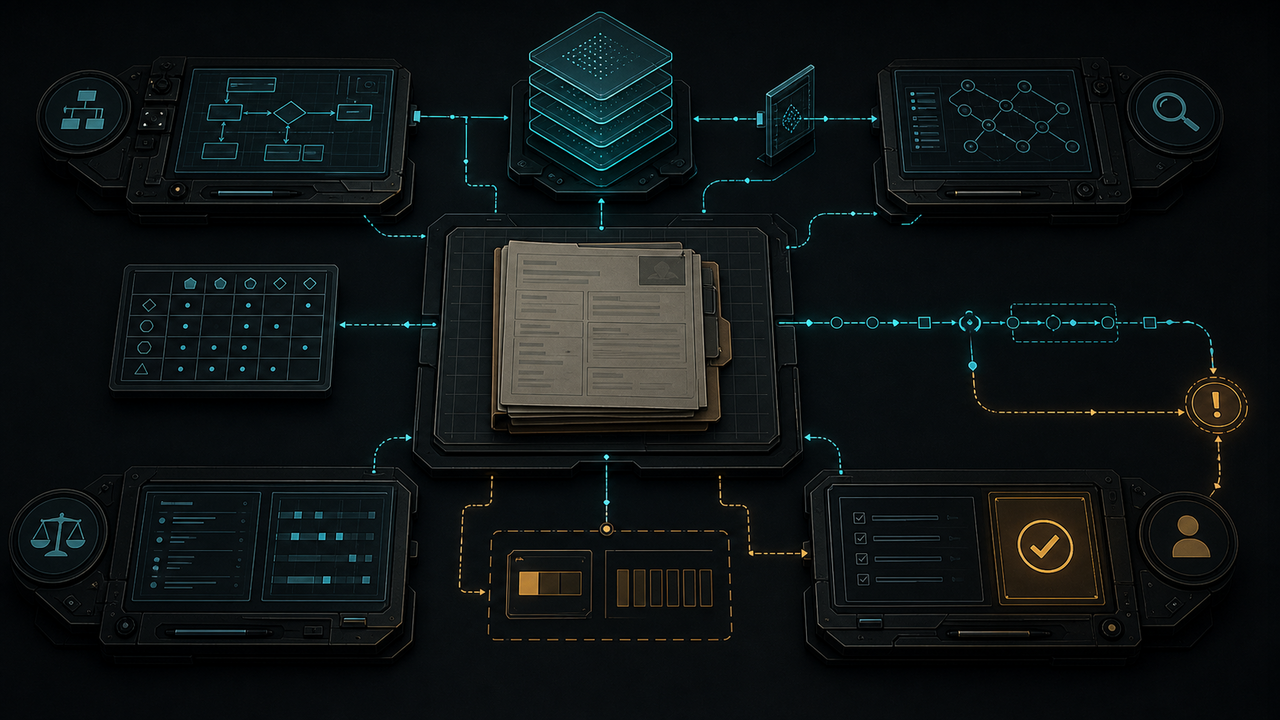
Dark casework cockpit with central case file, agent workcells, role matrix, memory stack, policy gate, trace line and recovery path
Latent memory

Latent multi-agent coordination

Our blueprint for agentic systems connects working memory, state handoff, cache strategy and agent roles into controllable cooperation. Each project receives a role matrix, memory rules, tool permissions, communication rules, budget limits and trace design. The implementation varies by project, but the baseline stays demanding: routing, direct or latent communication, recovery and review must be governed.

Use case: a casework cockpit where a planning agent structures a case file, a research agent checks sources and rules, a review agent marks conflicts and the domain expert approves only outputs backed by trace, source and fallback path.

Flat timing sheet with real-time waveforms, interruption cut, fallback branch and handover threshold
Live interaction

Multimodal real-time interfaces

The real-time interaction layer brings streaming, turn-taking, interruption, context state, visual output, identity control and handover together. An avatar can sit on top of that layer; its purpose is controlled real-time interaction. The same pattern can appear in a cockpit, voice dialogue or review flow; what matters is the controlled state transition with visible status, fallback and human takeover.

Use case: a service or training dialogue that handles speech, gaze, interruption and waiting state, asks follow-up questions under uncertainty and can be delivered as a tailored avatar, cockpit or voice-only interface.

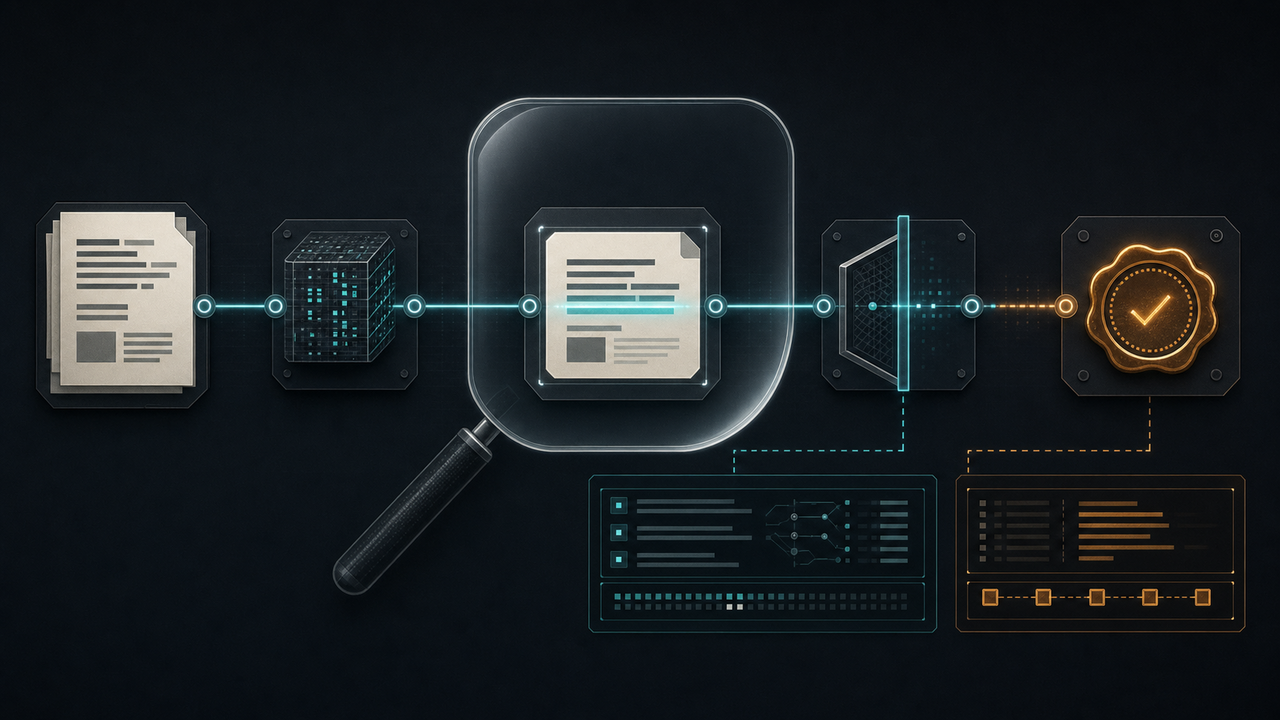
Dark evidence chain with document recommendation, source evidence, data status, model capsule, rule check, review seal and audit views
Explainable evidence

Explainability and traceability

The evidence layer connects knowledge spaces, source links, logs, evaluation sets, role-specific explanations and review points into a traceable trail. In public-sector or regulated environments, this evidence layer becomes a criterion for whether AI can be used responsibly in production. LatentDrift builds that trail as engineering work from the start.

Use case: a document review flow where every recommendation links back to source, data status, model version, rule check and review status so domain teams, operations and audit see different but consistent evidence.

Engagement formats

Ways to work with us.

LatentDrift turns specialized AI system work into bounded engagement formats. Each one produces a decision, an architecture or a testable system component, plus artifacts your team can keep using while preserving technical portability for later model or vendor decisions.

AI system check

A compact entry point for use cases that are still unclear. We assess data status, risks, latency, data rights, explanation requirements and the right technical lever within the LatentDrift portfolio. The result is a decision map with a clear recommendation: build, narrow the scope, clarify data/evidence first or deliberately stop.

  • Unclear use case
  • Data and rights
  • Explanation requirements
  • Stop/go decision

Architecture sprint

For initiatives where it is clear that an agent, knowledge-space, evidence-layer or real-time system is needed. We define the operating specification: roles, memory, tool permissions, interfaces, trace events, evaluation logic, handover and the first technical roadmap.

  • Role model
  • Memory rules
  • Tool permissions
  • Handover roadmap

Pilot implementation

A bounded, testable system component for a real decision or interaction: agentic operating layer, evidence layer, knowledge space, real-time interface or control room. The implementation makes the surface and execution path visible: sources, state changes, metrics, failure paths and handover.

  • Visible system run
  • Sources and state
  • Failure paths
  • Handover for build-out

Entry points

Three common ways into a project.

The first question is rarely "Which model?". Usually it is a decision, process or interaction that needs to become controllable. From there we scope the right first system component: small enough for real review, concrete enough for operations and open enough to expand later.

Agent cockpit for casework

When domain processes combine research, planning, review and approval, we define roles, memory scope, tool permissions and trace events first. A first working component then shows which agent owns which step, which output remains only a suggestion and where the domain expert decides.

  • Clear role ownership
  • Governed tool permissions
  • Visible trace events
  • Domain expert decides

Evidence backbone for knowledge

When answers must be attributable, we build the knowledge space as a traceable evidence layer. Sources, data status, chunks, access rights, model run, explanation and review status are connected so domain teams, operations and audit can see different views of the same trail.

  • Source grounding
  • Data status and access
  • Role-specific explanation
  • Audit sees the trail

Real-time interaction for dialogue

When people work with AI live, we define listening, waiting, interruption, follow-up questions, speaking and handover as states. An avatar, voice flow or cockpit is then the surface on top of controlled reaction logic.

  • Listen and wait
  • Interrupt cleanly
  • Ask back
  • Human handover

Deliverable shape

A system with handover, not loose parts.

The visible surface is only one part. Each engagement produces a bounded system with operating rules, code, tests and handover: which states are valid, which data may be used, how a run is reviewed, which role approves and how a later model or data change will be evaluated. The work stays reusable without forcing the client workflow into a rigid suite.

  • Decision map and operating specification
  • Working component with traces, evaluation and failure paths
  • Handover package for extension, operations and review
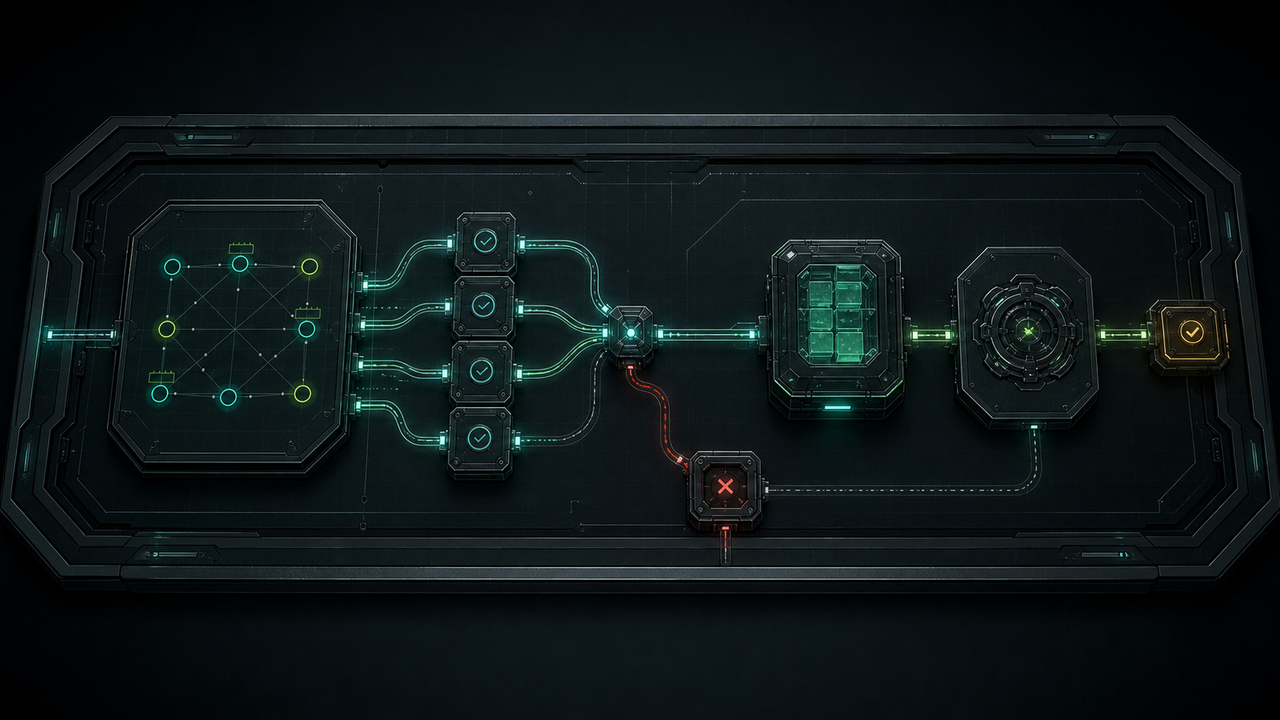
Technical operating frame with decision map, trace lanes, evaluation checkpoints, failure path and handover package

First alignment

Start with a concrete use case.

A short sketch is enough: process, available data, user role, critical failure mode and one output that must be attributable. From there we can tell whether the first useful step is an AI system check, architecture sprint or pilot implementation.

Share a case